Air Incident Over Poland: Why a NATO Fighter Jet Withheld Fire on a Russian Missile
A Swedish Gripen pilot was cleared to intercept a Russian Kh-101 missile over Poland but did not fire due to severe weather and inability to positively confirm the target.
 🚌Transport
Photo: TSN
Key points
- A Swedish Gripen pilot was authorized to shoot down a Kh-101 over Poland but withheld fire due to poor target verification.
- Three airborne objects traveling over 800 km/h violated Polish airspace during strikes on western Ukraine.
- Red alert sirens sounded across Lublin and Podkarpackie voivodeships; missile wreckage was recovered with no casualties.
During a heavy Russian strike targeting western Ukrainian regions, multiple airborne weapons breached state borders and crossed into Polish airspace. While NATO interceptors were scrambled to counter the breach, weapons were ultimately not deployed due to safety protocols and impossible tracking conditions.
Target Identification Impeded by Severe Weather
Lieutenant General Ireneusz Nowak, Operational Commander of the Polish Armed Forces, stated that a Swedish Gripen pilot received authorization from NATO's Combined Air Operations Centre in Uedem, Germany, to shoot down a Russian Kh-101 cruise missile. However, the aviator chose not to engage because neither visual observation nor onboard optical sensors could definitively identify the target amid extreme weather conditions.
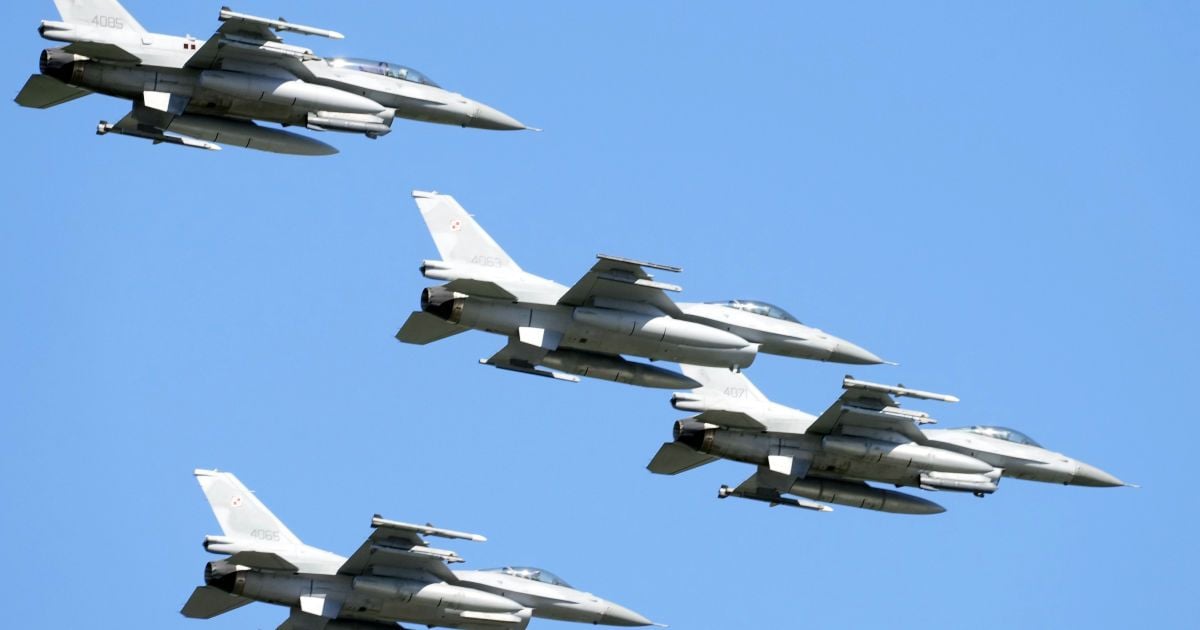
The defensive umbrella included two Polish F-16s deployed from Łask air base, two Swedish Gripens, a Saab 340 surveillance aircraft, and a Dutch MRTT tanker, assisted by ground air defense batteries. According to military regulations, failure to meet all verification criteria precludes weapons release to protect populations on the ground.
Border Alert and Missile Debris
Polish defense systems tracked 11 potential threat objects, three of which crossed the border traveling at speeds exceeding 800 km/h. Officers indicated these were either Kh-101 cruise missiles or jet-powered attack drones. Strong detonations were heard in several border districts, where debris was later located. No casualties were reported.
Maximum threat levels triggered air alarms across Poland's Lublin and Podkarpackie voivodeships. Polish officials condemned the intrusion as a deliberate provocation, while NATO's leadership described the airspace violation as deeply alarming and hazardous to international safety.
Source TSN — tsn.ua/politika/rosiyski-rakety-nad-polshcheiu-pilot-vynyshchuvacha-mav… ↗
Read next
 🎓Education
Winter weather and snowfalls: Forecasters predict temperature fluctuations across Ukraine
This week, Ukraine expects unstable weather with snow and rain, accompanied by daytime frosts reaching -6 degrees Celsius.
 🎓Education
Samsung Redesigns Galaxy Interface: Now Bar to Mimic Dynamic Island Features
Samsung is testing a new centered notification layout for the Galaxy S27 series, introducing improved gestures and 'Moment effects'.
 🛡️Security
Jet-powered Geran-5: The Dangers and Features of the New Russian Drone
Russian forces have begun using new drone modifications, including the jet-powered Geran-5, which significantly outperforms standard UAVs in speed and destructive force.
 🚨Events
Tax burden during shutdown: What state support is needed for metallurgy giants
Experts and lawmakers discuss the need to ease the fiscal pressure on mining and metals enterprises that have halted operations due to security risks.
 🚨Events
Mild winter and mixed precipitation: what December 2026 will look like in Ukraine
Climatologists forecast a warmer-than-average December 2026 with temperatures above normal, though short cold snaps are possible in the second half of the month.
 🛡️Security
Aftermath of the Dymer attack: fate of the displaced residents
Following a night drone strike on Dymer in the Kyiv region, 11 people have died, and displaced residents have been provided with temporary housing.