Fusion reactors in space: scientists explore new energy sources for deep space missions
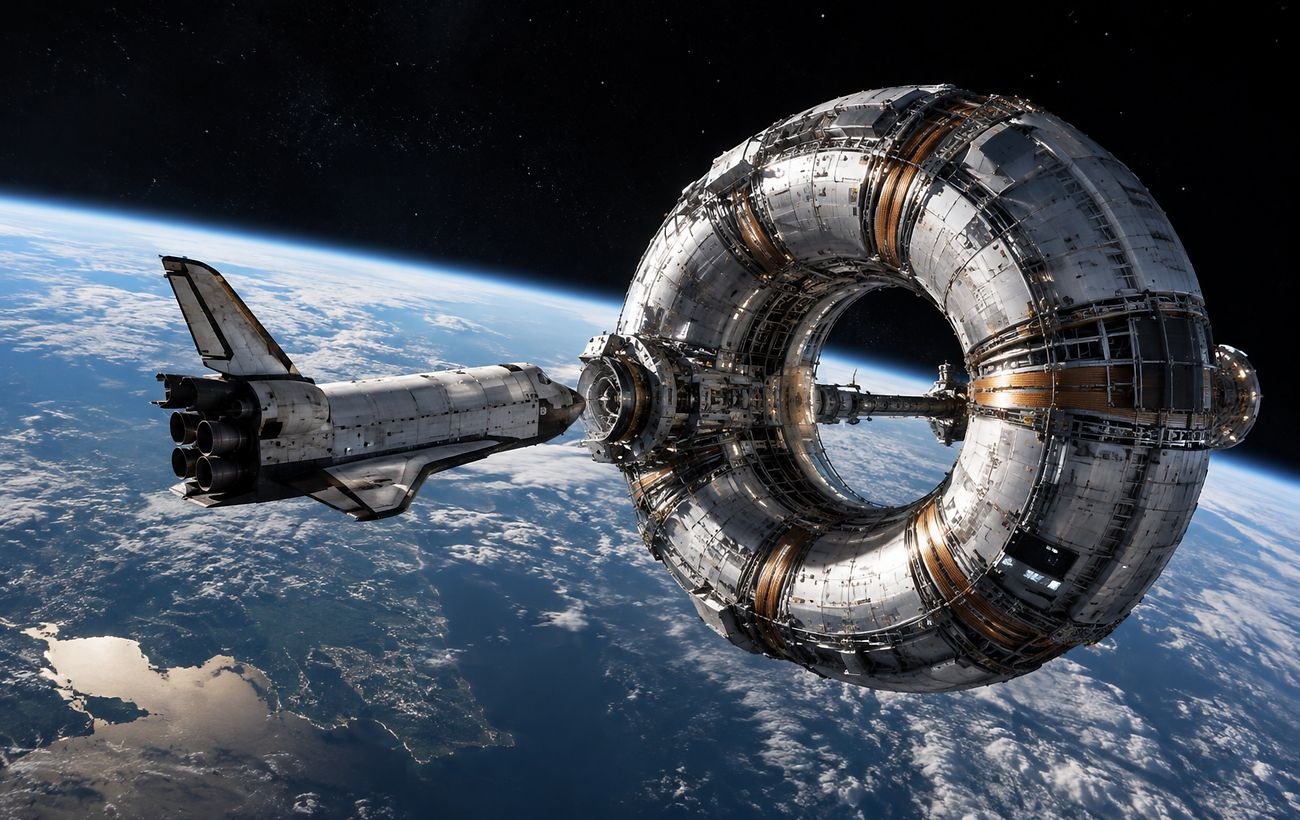
Researchers propose placing fusion reactors in orbit to power future space settlements and industrial missions.
 💡Tech
Photo: RBC-Ukraine
Key points
- Tokamaks in geostationary orbit
- Cooling benefits of space environment
- Alternative to radioactive fission reactors
Powering the future beyond Earth
Scientists have introduced a concept for placing fusion reactors directly into Earth's orbit. According to a study published in ResearchGate, utilizing tokamaks in space could solve the power demands of long-term space settlements and orbital industrial facilities.
Physicist Yang Bai from the Spacefaring Research institute highlights several advantages of the space environment. Microgravity reduces mechanical stress on reactor structures, the lack of atmospheric pressure allows for lighter vacuum chambers, and the vacuum of space provides efficient cooling through thermal radiation.
Technological challenges and prospects
While these projects are currently theoretical, calculations suggest the potential for a 1-gigawatt installation capable of powering large-scale orbital infrastructure. In addition to magnetic plasma confinement, researchers are investigating the use of high-power lasers to trigger fusion reactions.
Unlike solar panels, which lose efficiency as missions travel further from the Sun, fusion power offers a stable energy source for lunar bases or deep space exploration. Furthermore, it presents a safer alternative to fission-based nuclear reactors, which raise concerns regarding radioactive materials.
Source RBC-Ukraine — rbc.ua/ukr/news/termoyaderni-reaktori-hochut-vidpraviti-kosmos-1795… ↗
Read next
 🛡️Security
Energy workers restore power in Rivne region following Russian attack
Electricity supply has been fully restored in the Sarny district of the Rivne region after being disrupted by a Russian attack on November 20.
 🏙️City
Autumn Rose Care in Novoyavorivsk: Pruning Tips for Gardeners
Experts explain why it is important to avoid aggressive pruning of roses until steady frosts arrive.
 🇺🇦Ukraine
Estonia supports Ukraine's right to self-defense following Gulf of Finland incident
Estonian Foreign Minister Margus Tsahkna stated that the strike on a Russian vessel is a consequence of Russia's war, affirming Ukraine's right to defend itself.
 🚨Events
Elderly woman rescued from rubble in Dymer: death toll rises
Search and rescue operations continue in the village of Dymer, Kyiv region, following a drone strike on a residential building. The number of confirmed fatalities has ris…
 🛡️Security
Russian corvette allegedly hit by Ukrainian drones in Libya
A Russian military ship, the corvette 'Mercury', exploded in the port of Benghazi, with reports suggesting a potential attack by Ukrainian maritime drones.
 🛡️Security
Russia tests NATO defense algorithms through airspace provocations, says Colonel Kashchenko
Military expert Dmytro Kashchenko stated that Russia is using airspace violations in Alliance countries to test the readiness of their air defense systems.