Destruction of Ukrainian Education Under Occupation: Testimony from Oleshky School Principal
Former principal of the Radensk Lyceum, Nataliia Vasylieva, spoke at the European Parliament about the forced Russification of schools in the Kherson region.
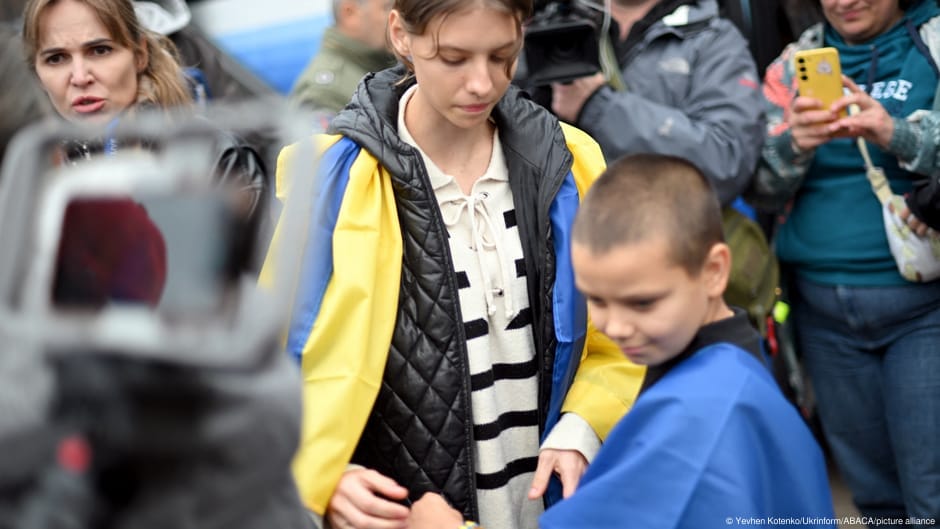 🎓Education
Photo: AutoGN education · Освіта Україна
Key points
- Forced implementation of Russian educational standards in Oleshky
- Physical destruction of Ukrainian textbooks and ban on history of Ukraine
- Psychological pressure on parents and students
- Testimony of school principal at the European Parliament
Systemic Pressure on Education
During a discussion at the European Parliament regarding children's rights during the war, the former principal of the Radensk Lyceum, Nataliia Vasylieva, revealed details of how occupation authorities in Oleshky attempted to dismantle the Ukrainian education system. She stated that from the very first days of the city's occupation, the invaders tried to convince educators of the 'inferiority' of Ukrainian curricula, demanding a transition to Russian standards.
The majority of Ukrainian teachers refused to cooperate, continuing to teach children remotely despite the risks and the lack of stable internet connectivity. Nataliia Vasylieva noted that the occupiers eventually blocked access to school premises for those who refused to comply, reopening the institutions only after recruiting loyal staff or bringing in teachers from Russia.
Eradication of Identity
The occupation regime not only altered curricula but also physically destroyed Ukrainian literature and textbooks, burning them. Teaching the history of Ukraine was strictly prohibited, and the Ukrainian language was reduced to a 'native language' elective, limited to only one hour per week.
«For children, this is primarily a deep psychological trauma. They were stripped of their right to know the traditions, culture, and history of their country, and their own identity,» Nataliia Vasylieva emphasized.
Parents attempting to shield their children from Russian propaganda were intimidated by the occupiers with fines and threats to place their children in boarding schools. Schools became sites of constant surveillance, where students were forced to learn the Russian national anthem and communicate exclusively in Russian.
Read next
 🛡️Security
Energy workers restore power in Rivne region following Russian attack
Electricity supply has been fully restored in the Sarny district of the Rivne region after being disrupted by a Russian attack on November 20.
 🏙️City
Autumn Rose Care in Novoyavorivsk: Pruning Tips for Gardeners
Experts explain why it is important to avoid aggressive pruning of roses until steady frosts arrive.
 🇺🇦Ukraine
Estonia supports Ukraine's right to self-defense following Gulf of Finland incident
Estonian Foreign Minister Margus Tsahkna stated that the strike on a Russian vessel is a consequence of Russia's war, affirming Ukraine's right to defend itself.
 🚨Events
Elderly woman rescued from rubble in Dymer: death toll rises
Search and rescue operations continue in the village of Dymer, Kyiv region, following a drone strike on a residential building. The number of confirmed fatalities has ris…
 🛡️Security
Russian corvette allegedly hit by Ukrainian drones in Libya
A Russian military ship, the corvette 'Mercury', exploded in the port of Benghazi, with reports suggesting a potential attack by Ukrainian maritime drones.
 🛡️Security
Russia tests NATO defense algorithms through airspace provocations, says Colonel Kashchenko
Military expert Dmytro Kashchenko stated that Russia is using airspace violations in Alliance countries to test the readiness of their air defense systems.